The world doesn’t wait for launches anymore.
Before a product is real, it’s already being talked about, Googled, snarked, Reddit wish-listed into existence.
For brands, this creates a strange paradox — the moment something drops, it’s already old. The intrigue, the desire, the cultural energy? That happens in the before.
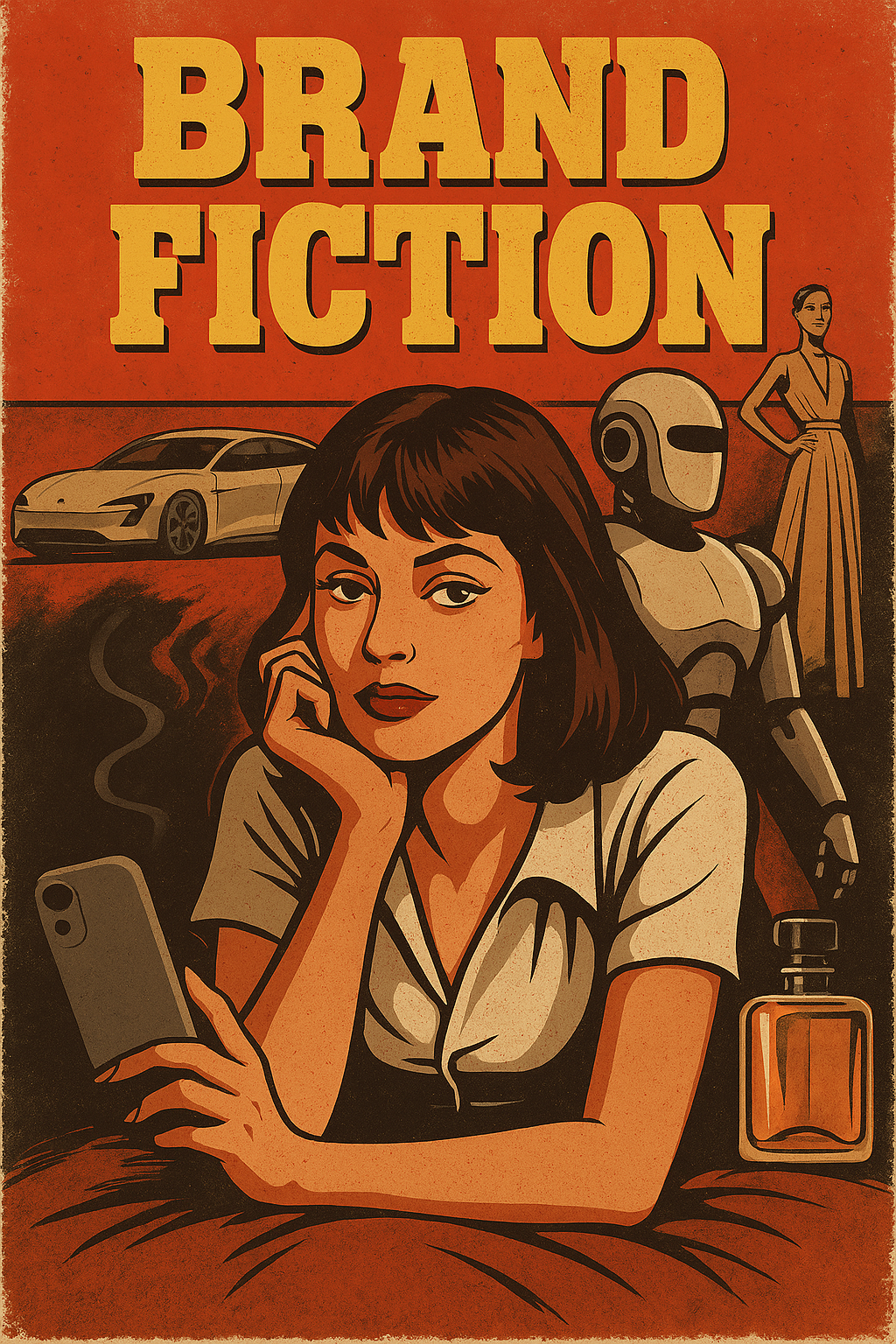
Enter brand fiction: speculative storytelling designed not to describe what is, but to propose what could be. A blend of imagination, strategy and narrative craft — brand fiction uses visual storytelling to shape market perception ahead of product. It’s a teaser trailer to a future that hasn’t happened yet.
And with AI, it’s no longer reserved for studios or big-budget innovation labs. Anyone with vision — and the right tools — can tell stories from the future.
“The future is already here – it’s just not evenly distributed.” — William Gibson
Desire Begins in the Unseen
Think about how luxury brands operate. A concept car. A couture line. A mood film that hints at something more than just clothes. These are not practical pieces of content. There is no giant price sticker on it.
They are signals — shaping perception long before the commercial product arrives. They don’t explain. They suggest. And in doing so, they stir desire.
Now imagine giving that same speculative power to a start-up skincare brand, a wellness founder, a fashion label in Mumbai, or a wearable tech designer in Helsinki. With AI-driven video and visual storytelling, they can do what legacy brands have always done — craft worlds around a product, long before it exists in final form.
This is what we mean by brand fiction: not marketing, not pitching, but prototyping stories of the future.
Prototypes of Emotion
Founders and product teams often prototype function. But the most successful launches prototype feeling.
What does the product mean? Who uses it? How does it change them? What world does it belong to? These are narrative questions. And speculative brand stories — poetic, abstract, sometimes strange — are the fastest way to start answering them.
AI enables this with unprecedented speed. At robotstory.ai, we work with brands to build cinematic story fragments around not-yet-released products. These aren’t demos. They’re glimpses into future lifestyles, emotional states, subcultures and design worlds. For investors, this creates traction. For consumers, it creates longing.
Not Just Hype — Intent
Speculative storytelling isn’t empty hype. It’s strategic myth-making. It lets you position a product before it’s boxed in by features or price points. It opens space for interpretation. For example:
- A pre-launch fashion label can release a mood film hinting at the world their clothing belongs to — not a lookbook, but a dream.
- A tech founder can craft a story about how their product changes daily life five years from now — not to explain the tech, but to sell the transformation.
- A fragrance brand might tell a story through AI-generated visual metaphors — desire as a corridor, scent as a memory, not one spray in sight.
The point is not fidelity. It’s suggestion. It’s the imaginative leap that pulls people into the orbit of your brand, before the product even lands.
The Role of AI
AI is the enabler here. It’s the tool that allows creative teams to iterate speculative visual stories at speed — without relying on traditional production cycles. It doesn’t replace vision. It accelerates it.
At robotstory.ai, we’re not automating storytelling. We’re giving brands a new kind of canvas — one where the future is sketchable. You feed in tone, aesthetic references, moodboards, themes. What comes out are stories that aren’t about now — they’re about next.
For pre-seed ideas, brand pivots, early traction, or cultural signalling, brand fiction becomes an unfair advantage. It tells the market, “This is where we’re going.” Not in a deck. In a story.
The Future Needs a Narrative
Every product launch is a moment. But moments fade.
Narratives endure.
The most powerful brands don’t just release things — they create context. They make their audience need the thing before it even exists.
That’s the power of speculative storytelling. It doesn’t wait for readiness. It builds the future in public. And it turns desire into demand.
In this new era, imagination isn’t fluff. It’s strategy. Brand fiction is how you make something real before it’s real — not by explaining the future, but by letting people feel it first.